
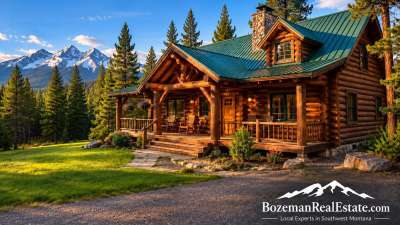
West Yellowstone Real Estate: Homes, Land & Cabins Near Yellowstone National Park
Explore West Yellowstone, MT real estate, including log cabins, lake-view lots, mountain acreage and homes near Yellowstone National Park throughout Gallatin County. Sitting at the park’s west entrance and bordered by Hebgen Lake and the Custer Gallatin National Forest, West Yellowstone includes in-town neighborhoods such as Madison Addition, Yellowstone Holiday and Aspen Hills, along with outlying lake and forest communities like Hebgen Lake Estates and Bear Trap Ranch.
Search current homes for sale in West Yellowstone, MT below, or explore land, cabins and recreational properties throughout the Hebgen Lake and Madison River corridor. Jean White and Britney White, REALTORS® with Berkshire Hathaway HomeServices Montana Properties, can help buyers evaluate lot access, utilities, HOA covenants, and the seasonal and rental considerations that come with owning property at the edge of Yellowstone National Park. Explore all West Yellowstone Neighborhoods
Homes for Sale in West Yellowstone, MT
West Yellowstone Real Estate: Homes, Land & Cabins Near Yellowstone National Park
By Jean White & Britney White, REALTORS® | Berkshire Hathaway HomeServices Montana Properties | BozemanRealEstate.com
West Yellowstone real estate occupies a spot few Montana markets can claim — the literal front door to Yellowstone National Park. At 6,667 feet in Gallatin County, this town of roughly 1,300 year-round residents functions both as a working gateway community for millions of annual park visitors and as a genuine mountain-living market for buyers chasing log cabins, lake lots, and forested acreage within walking distance of the park boundary.
Explore Southwest Montana Markets → Browse All Community Guides
West Yellowstone Real Estate Market Snapshot
As of mid-2026, homes for sale in West Yellowstone carry a median list price around $1.09 million, with price per square foot averaging roughly $342 — numbers that reflect both the town’s tight lot supply and its national-park proximity premium. Properties spend a median of about 113 days on market, longer than Bozeman’s faster-moving core, giving buyers more room to evaluate a purchase. Inventory stays lean year-round, with 30 to 47 active listings at any given time split among single-family homes, a handful of condos, and a steady trickle of vacant land. Market statistics referenced in this article are sourced from realtor.com. Figures are subject to change and should be independently verified for time-sensitive decisions.
That land scarcity matters for buyers thinking long-term. West Yellowstone land for sale — a cul-de-sac lot in town or acreage toward Hebgen Lake — tends to hold value well precisely because so little of it exists inside a market this bounded by national forest.
Neighborhoods and Property Types
In-town, West Yellowstone neighborhoods like — Madison Addition, Yellowstone Holiday, and Aspen Hills — offer the most walkable options, putting buyers within blocks of the park entrance, downtown restaurants, and the Yellowstone Airport. Just outside town, Hebgen Lake Estates and the broader Hebgen Lake corridor deliver the classic Montana lake-cabin experience, with several subdivisions carrying community water and sewer that simplify building versus raw acreage. Bear Trap Ranch and Grayling Arm Meadows round out the larger-acreage options for buyers wanting more separation from neighbors.
Property types split three ways: historic and newer-build log cabins (some dating to the early 1900s Oregon Short Line Railroad era), single-family homes on standard in-town lots, and vacant land from quarter-acre building sites to multi-acre parcels bordering Custer Gallatin National Forest. Buyers cross-shopping the region often compare this inventory against Big Sky’s luxury condo and ski-property market or Paradise Valley’s riverfront ranches, both about an hour or more away along the Highway 191 corridor.
Life and Recreation
Buyers drawn to West Yellowstone real estate are usually buying a lifestyle as much as a property. The Madison River and Henry’s Fork — two of the country’s most storied fly-fishing waters — sit minutes from town, and Hebgen Lake adds boating and lake fishing. Winters bring some of the best snowmobiling and Nordic skiing access in the region, feeding directly into the park’s groomed routes. For a fuller picture of what year-round life here actually feels like — winter access, schools, and shoulder seasons — see our companion guide, Living in West Yellowstone Year-Round.
Why Buy Real Estate in West Yellowstone
Whether the goal is a full-time home, a fishing or snowmobiling retreat, or a long-term land investment in one of Southwest Montana’s tightest markets, West Yellowstone rewards buyers who understand its neighborhoods, seasonal rhythms, and limited inventory. Local guidance matters here — knowing which lots have utilities in place, which subdivisions carry HOA restrictions, and which cabins have been maintained can be the difference between a smooth purchase and a costly surprise. For park access conditions that affect property viability, see the National Park Service’s Yellowstone winter travel page; for local permitting and town services, the Town of West Yellowstone’s official site is the authoritative source.
Frequently Asked Questions
Is West Yellowstone a good real estate investment? Yes — its landlocked geography inside Custer Gallatin National Forest keeps supply permanently limited, which has historically supported steady value retention even through slower sales periods.
How much does a home cost in West Yellowstone, MT? As of mid-2026, the median list price is approximately $1.09 million, or about $342 per square foot.
Can I buy vacant land in West Yellowstone? Yes — vacant land is available both in-town on smaller lots and toward Hebgen Lake on larger acreage, though inventory is consistently thin.
What neighborhoods are closest to the park entrance? Madison Addition, Yellowstone Holiday, and Aspen Hills are the most walkable, in-town options nearest the west entrance.
Is short-term rental allowed in West Yellowstone? Rules vary by subdivision and zoning; buyers should confirm rental restrictions with the town and any HOA before purchasing with rental income in mind.
How far is West Yellowstone from Bozeman? About two hours via US-191, with Bozeman Yellowstone International Airport as the nearest major airport.
Bozeman Chamber → bozemanchamber.com
West Yellowstone Chamber → destinationyellowstone.com
Explore Regional Market Reports → Sign Up for Free Southwest Montana Market Reports