
Fly Fishing & Outdoor Recreation in Paradise Valley, Montana: A Buyer’s Guide to River-Access Living
By Jean & Britney White, BozemanRealEstate.com · July 2026 · 10 min read
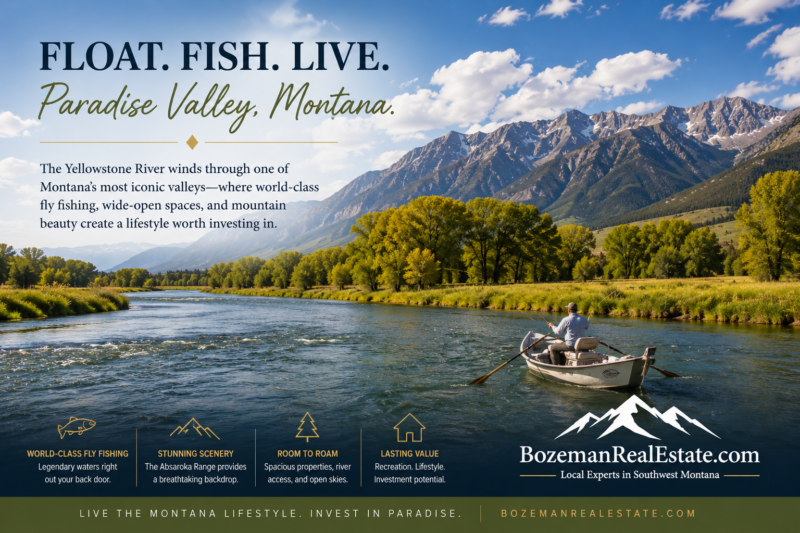
There’s a reason nearly every conversation about buying property in Paradise Valley eventually turns into a conversation about Fly Fishing & Outdoor Recreation in Paradise Valley, Montana. In most Montana markets, recreation is a nice bullet point on the listing sheet. Here, it’s the market. The Yellowstone River doesn’t just run through this valley — it sets the price per acre, decides which parcels sell in days versus years, and shapes the entire character of who ends up living here.
We wrote our comprehensive guide to living in Paradise Valley Montana to cover the market, the communities, and what buyers need to know before purchasing. This post goes deeper on the piece that actually drives the buying decision for most of our clients: what there is to do here, and how that recreation translates into real property value.
The Yellowstone River: The Valley’s Defining Asset
The Yellowstone is the longest free-flowing river in the Lower 48 — no dams between its headwaters in the park and its confluence with the Missouri. The stretch running through Paradise Valley, from the Gardiner boundary north to Livingston, carries Blue Ribbon trout water designation, and it fishes differently depending on where you stand on it.
Public access points give floating and wading anglers plenty of room without owning a foot of riverbank. Carbella and the Point of Rocks access site serve the southern floats near Emigrant, while Mallard’s Rest and the stretch below Livingston handle the northern water. Brown trout, rainbow trout, and native cutthroat all hold in this river, and the hatch calendar runs nearly year-round — Mother’s Day caddis in late spring, salmon flies in June, hoppers through late summer, and streamer season for trophy browns each fall.
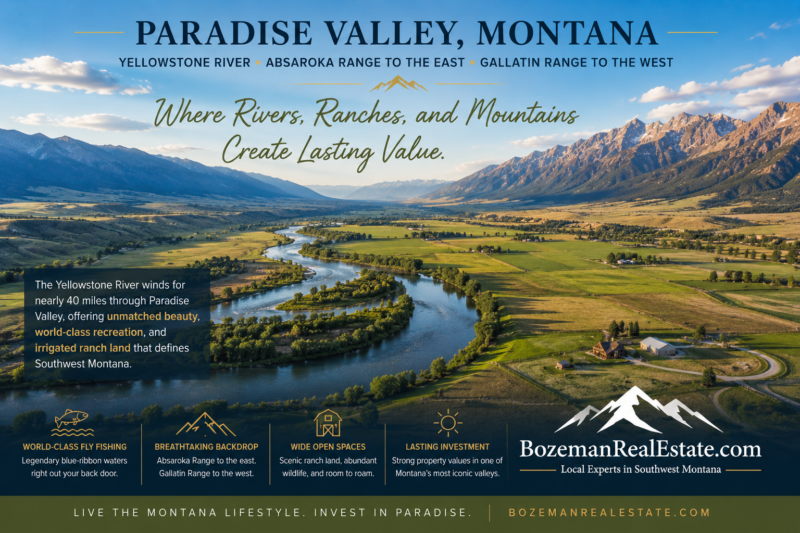
For buyers, the practical distinction is between public-access proximity and deeded river frontage. A property a mile from a public access site gives you all the fishing with none of the maintenance or flood-plain considerations. A parcel with deeded frontage puts private water at your back door — and, as we cover in our Montana riverfront property guide, that distinction alone can add seven figures to a listing price in this valley.
Spring Creek Fishing: Armstrong’s, DePuy’s & Nelson’s
Ask a serious fly angler what actually put Paradise Valley on the map, and many won’t say the Yellowstone at all — they’ll say the spring creeks. Armstrong’s, DePuy’s, and Nelson’s spring creeks sit on private working ranches near Livingston, and they’re internationally recognized as some of the most technical dry-fly water in North America. Consistent flows, gin-clear water, and prolific hatches make these creeks a bucket-list destination, but they require reservations and daily access fees rather than public rod access.
For property owners, proximity to these creeks (rather than ownership of them, since they sit on private ranch operations) is itself a lifestyle amenity that shows up in local marketing and resale conversations. It’s part of why Emigrant and the stretch of valley closest to Livingston carry a premium that has little to do with square footage.
If you’re comparing the technical dry-fly experience here against the bigger-water floats closer to Bozeman, our fly fishing guide to Bozeman’s Blue Ribbon rivers breaks down how the Gallatin and Madison compare, and buyers weighing river access against valley access also frequently look at Madison River real estate as an alternative water-focused market.
Beyond the River: Hiking the Absaroka-Beartooth Wilderness
Fishing gets the headlines, but the Absaroka-Beartooth Wilderness on the valley’s eastern flank is one of the largest roadless areas in the Lower 48, and trailheads sit within minutes of valley properties. Pine Creek Falls is the classic introduction — a moderate 2.5-mile out-and-back to a genuinely impressive waterfall, manageable for most fitness levels and popular enough that you’ll want an early start in July and August.
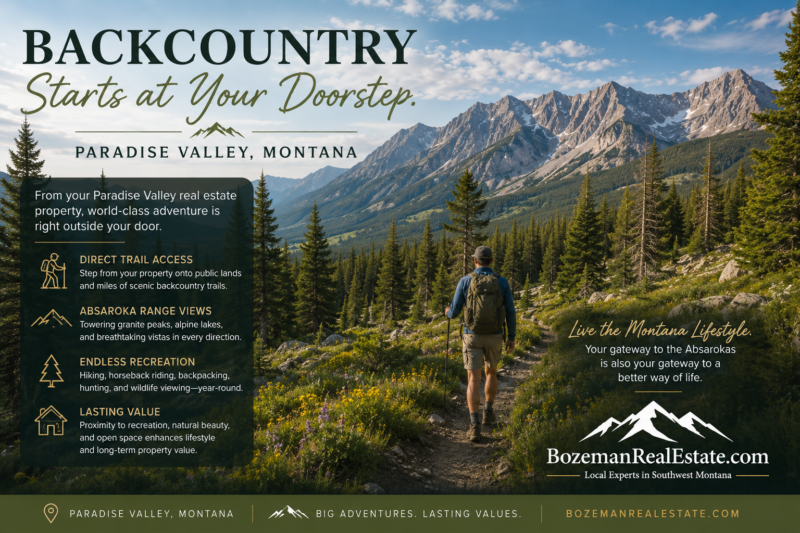
For buyers who climb, the granite at Allen spur offers routes across a range of difficulty levels, and Mount Cowen draws experienced alpine climbers looking for something bigger and less traveled. Properties adjoining national forest boundaries or with direct trailhead access are a distinct sub-category of buyer demand in this market — often overlapping with, but not identical to, the river-frontage buyer.
Hot Springs, Dining & the Social Center of the Valley
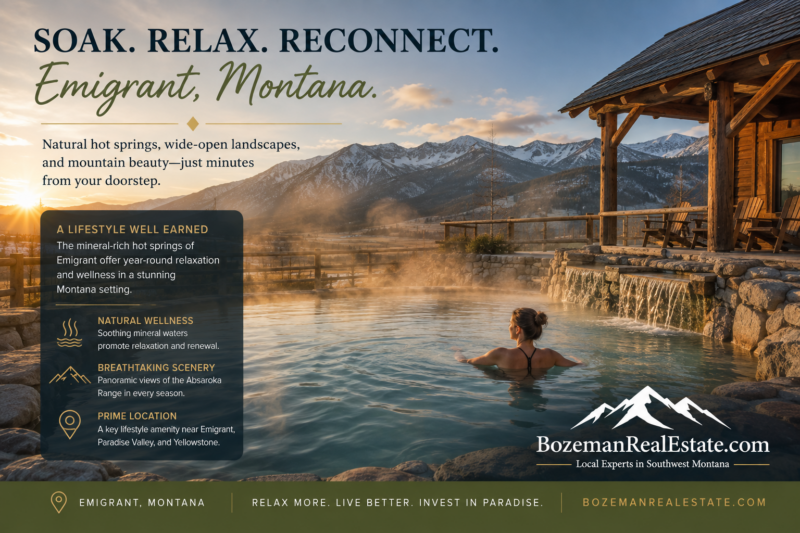
Chico Hot Springs Resort near Emigrant has anchored valley social life for more than a century, and it still functions that way — the outdoor geothermal pool, the dining room, and the saloon are where residents actually run into each other. La Duke Hot Springs offers a quieter, more primitive soak closer to Gardiner. We cover both in more detail in our Living in Paradise Valley guide, but from a real estate standpoint, proximity to Chico specifically is one of the more consistent value drivers we see in the Emigrant sub-market.
Wildlife, Hunting & the Migration Corridor
Paradise Valley sits directly on a migration route connecting Yellowstone National Park to the surrounding national forest, and it shows. Elk, mule deer, pronghorn, and moose move through seasonally, with documented wolf and grizzly activity as well. Large valley ranches have historically supported elk herds numbering in the hundreds during migration windows, and hunters specifically target properties bordering the Absaroka-Beartooth Wilderness or adjacent public land for that reason.
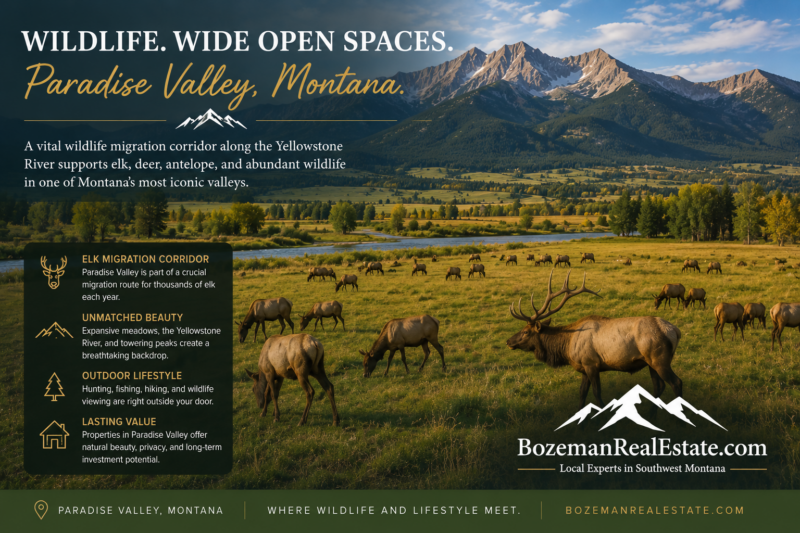
For wildlife watching without a rifle, the Lamar Valley inside Yellowstone — widely considered the best wolf- and bison-watching corridor in North America — sits under an hour from the valley’s southern end, accessible through the North Entrance at Gardiner.
Winter in Paradise Valley: Quieter Than You’d Expect
Winter recreation here looks different from Bozeman’s ski-town energy. Bridger Bowl and Big Sky Resort are both under 90 minutes away for downhill skiing, but the valley itself leans toward Nordic skiing, snowshoeing, and snowmobiling on open, uncrowded terrain. It’s a meaningful selling point for buyers who want winter access without winter crowds — and it’s part of the self-sufficiency lifestyle we describe in more depth in the Living in Paradise Valley guide.
Matching Recreation Priorities to Property Type
Not every buyer needs the same thing from this valley, and matching recreation priority to property type saves a lot of wasted showings:
- Serious anglers prioritizing private water → deeded Yellowstone riverfront homes, concentrated near Emigrant and Livingston
- Hikers and climbers wanting trailhead proximity → mountain-view ranchettes along the valley’s eastern bench, adjoining national forest
- Hunters targeting migration corridors → larger working ranch parcels bordering public land or wilderness boundary
- Yellowstone-focused buyers wanting frequent park access → properties near Gardiner, prioritizing the North Entrance over river frontage
- Buyers wanting the social/dining anchor → Emigrant-area properties within easy reach of Chico Hot Springs
If you’re still deciding how much land, water, or wilderness adjacency actually fits your lifestyle, that’s exactly the kind of conversation worth having before you start touring properties rather than after.
Frequently Asked Questions
What is the best fishing access in Paradise Valley, Montana?
The Yellowstone River offers public access points throughout the valley, including Carbella, Point of Rocks, and Mallard’s Rest, alongside private spring creeks like Armstrong’s, De Puy’s, and Nelson’s, which require advance reservations and daily rod fees.
Do riverfront properties in Paradise Valley include private fishing access?
Many do, but not all. Deeded river frontage typically includes private access rights, though buyers should always confirm the specific water rights and access easements attached to a parcel before purchase, since Montana stream access laws differ from ownership of the streambed itself.
Is Paradise Valley good for hiking and wildlife viewing, not just fishing?
Yes. The valley sits between the Absaroka-Beartooth Wilderness and the Gallatin Range, with trailheads for hikes like Pine Creek Falls, and it serves as a migration corridor for elk, mule deer, and pronghorn between Yellowstone National Park and surrounding national forest.
Ready to Find Your Piece of Paradise Valley?
Whether you’re chasing private river frontage, a trailhead out your back door, or proximity to Yellowstone’s North Entrance, matching the right recreation to the right property is what we do every day in this market. View current Paradise Valley listings or reach out to Jean and Britney White for on- and off-market opportunities across Park County.
Planning a visit before you buy? The Bozeman Chamber of Commerce is a good resource for regional events and visitor information as you get to know the area.

Leave a Reply